Runaway Hero
A BOOK by ME - True Stories Written by Kids for Kids
Written by Laney Keller and Illustrated by Nina Osterhaus
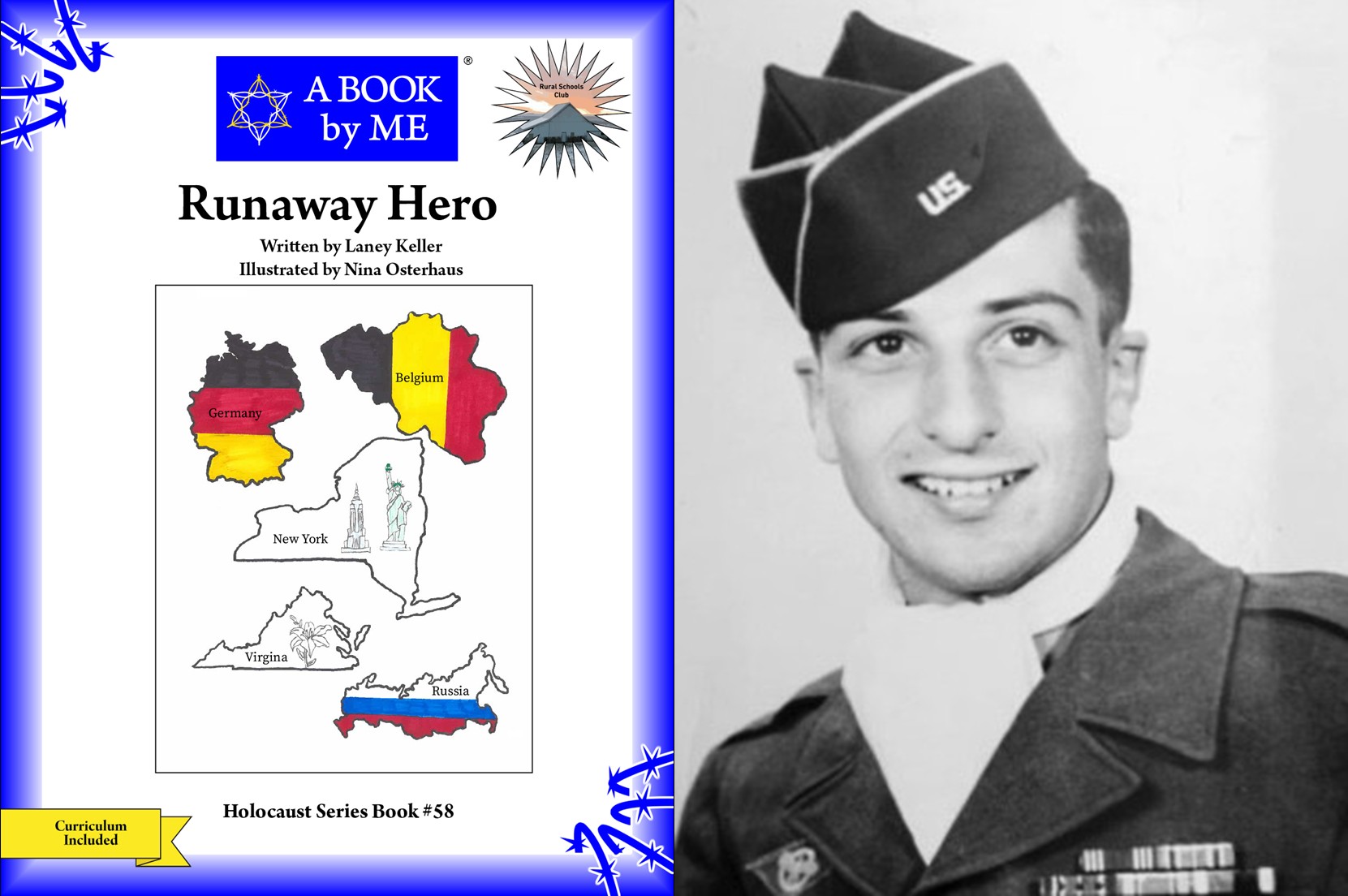
What a privilege it was to get to know Frank Cohn, a remarkable Holocaust survivor, decorated Army veteran, and true American patriot. I especially appreciated the opportunity to meet him in person after he celebrated his 100th birthday. Despite all he endured, Frank devoted his life to serving his adopted country and teaching future generations the importance of freedom and democracy. His passing on July 4, 2026, during America’s 250th anniversary year, seems especially fitting for a man who loved this country so deeply. I will always be grateful for our friendship and the honor of helping preserve his legacy through A BOOK by ME.
— Deb Bowen, Executive Director Understanding Works NFP
We can’t thank Frank enough for sharing his story with us. His story is unique and moving. While listening, our class noticed just how much of a hard time Frank had endured. It’s difficult to imagine life during the Holocaust, but we tried as Frank told us his story. It helped when our teacher Mrs. Lopez took us on a field trip to the Holocaust Museum in Skokie, Illinois. Frank’s story is just one of millions about people who have gone through terrible times just like Frank.
He may not have had it the worst, but he definitely didn’t have it the best. Nothing about the Holocaust was good or positive, but Frank and many others tried their best to stay resilient and were able to push through the >hard times. We celebrate freedom in America thanks to veterans like Frank.
Sincerely,
Laney Keller, Author
Nina Osterhaus, Illustrator
-
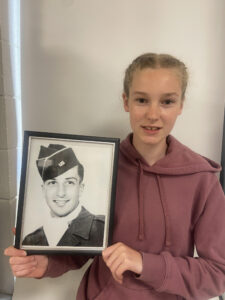
- Laney Keller, Author
-
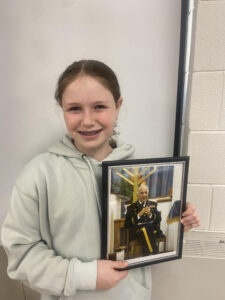
- Nina Osterhaus, Illustrator
Frank Cohn — Jewish Holocaust Survivor, U.S. Army WWII, Korea Post-War & Vietnam War
Frank Cohn was born on August 2, 1925 to Jewish parents, Martin and Ruth Cohn, in Breslau, Germany. Before World War II, Breslau was the capital of the German province of Niederschlesien and the fourth-largest city in Germany. Following the war in 1945, the city was ceded to Poland, and the German inhabitants were largely expelled. The city was renamed Wrocław, which is now Poland’s third largest city.
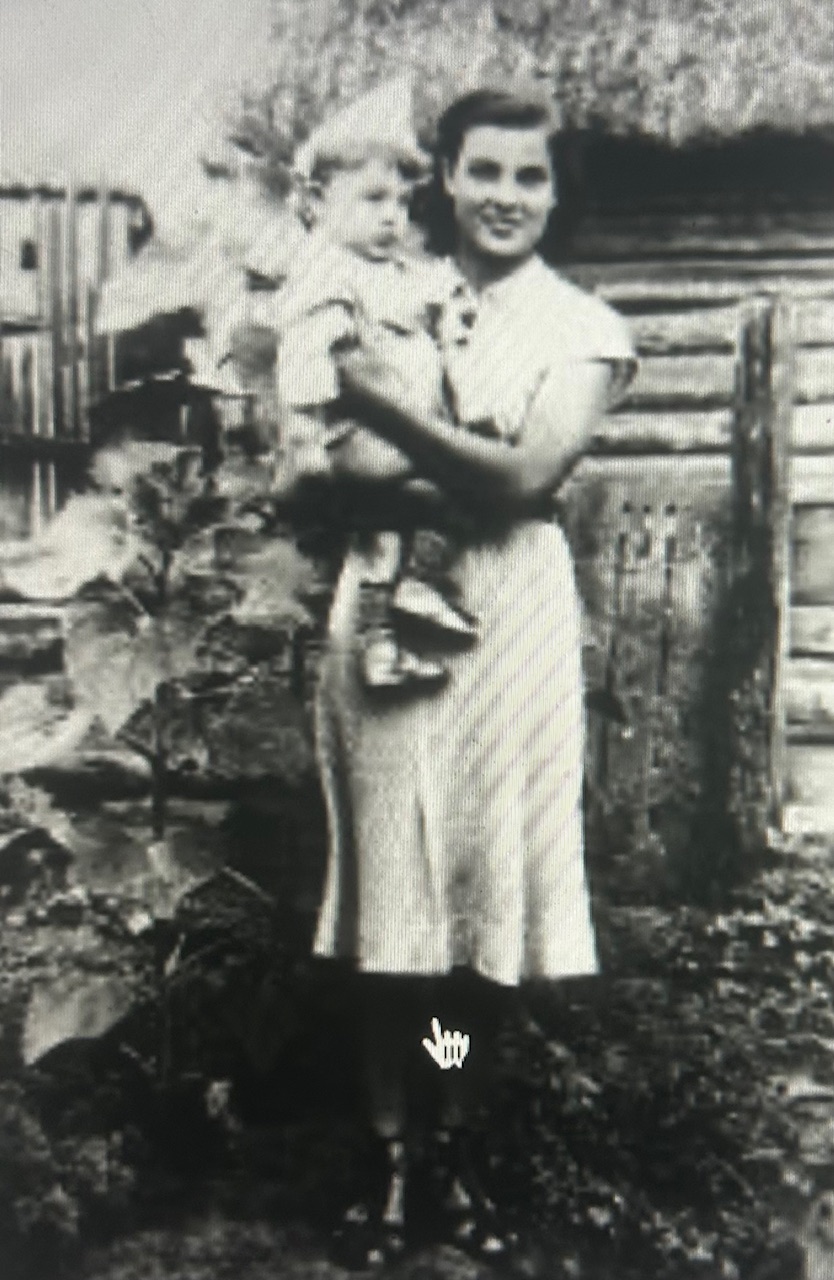
Ruth Cohn holding her son Frank
Frank lived happily as an only child. His father owned a sporting goods store. Soon the violence stemming from antisemitism began to affect their family, and Nazis brutally attacked Frank’s Uncle Max. He suffered severe injuries and ultimately died in June 1930. The classroom atmosphere in Frank’s school changed dramatically during his second- and third-grade years. His favorite teacher, once a man of kindness, came to school dressed in a Nazi uniform. From that point on, indoctrination infiltrated the classroom, and the teacher enforced a strict order, making Frank remain seated while other students stood to sing Nazi songs. As a Jewish boy, Frank became an outcast, shunned by his classmates. The children who once played with him in the sandbox no longer appeared. Martin and Ruth decided to transfer him to a private Jewish school.
When Hitler came to power in 1933, and after Nazis picketed the store with signs that read “Don’t Buy from Jews,” Martin sold the family business. In August 1938, at the age of 13, Frank celebrated his Bar Mitzvah, a significant rite of passage for Jewish boys. Martin sought ways to leave Germany, obtaining a visa to visit America to ask relatives for sponsorship. Ruth, terrified when the Gestapo came looking for Martin, took steps to expedite her and her son’s departure by securing a visitor’s visa to the U.S.. She wrote to her husband, urging him to stay there. She bribed a German clerk to add Frank’s name to the visa. Then, they quietly packed two suitcases and, without telling any friends, Ruth and Frank tiptoed out of their apartment, hoping to avoid detection. Soon, they were on a ship bound for New York City.
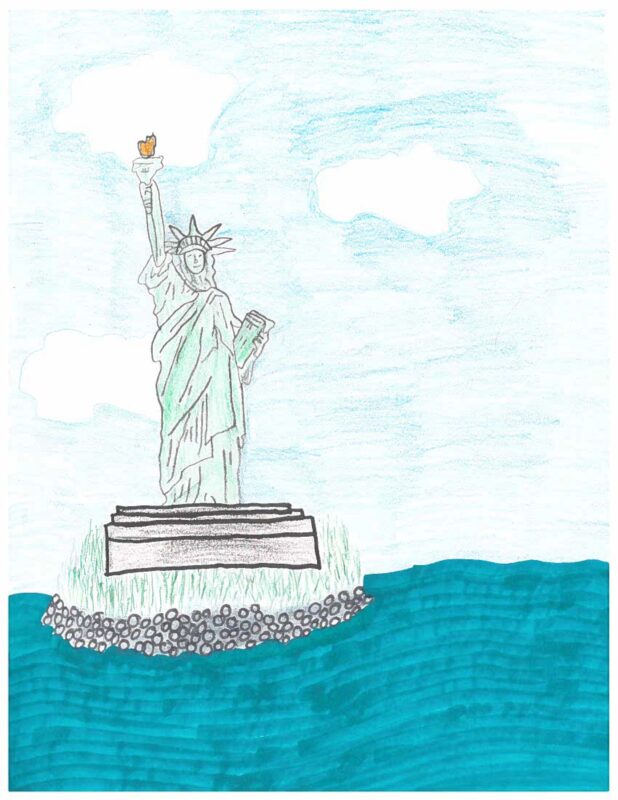 Frank’s family reunited in New York on October 30, 1938. Days later, on November 9, a two-day wave of anti-Jewish violence, known as Kristallnacht, began throughout Nazi Germany. This “Night of the Broken Glass” marked a turning point for Jews, as 30,000 Jewish men were arrested and sent to concentration camps, hundreds of synagogues were burned, and Jewish businesses were vandalized or destroyed. President Roosevelt used his executive authority to extend the visas of all Germans traveling in the United States, allowing the Cohn family to remain in the U.S. indefinitely. Frank settled in with his family in New York, went to school, and focused on improving his English.
A month after his 18th birthday in 1943, Frank was drafted into the U.S. Army. He viewed it as a chance to give back to his country and he was ready to serve. Initially, he was classified as an “enemy alien,” a term for natives of countries with which America was at war, and he underwent Basic Training at Fort Benning, Georgia. He was proud to eventually be sworn in as a U.S. citizen and assigned to the 87th Infantry Division. Frank shipped out on the Queen Mary as an infantry replacement bound for England.
Frank was sent to Belgium, where his ability to speak German led to his assignment at Le Vésinet, France for a two-week military intelligence course. Due to the urgent needs of his unit, he completed only a week of the course before being deployed to Luxembourg. He joined a six-man team (two officers, two interpreters, a driver, and an NCO in charge) known as the Interrogator Prisoner of War (IPW) Team #66, attached to an intelligence unit called T-Force (Taskforce), part of the 12th Army Group. In December 1944, his unit returned to Belgium, arriving about a week before the Battle of the Bulge.
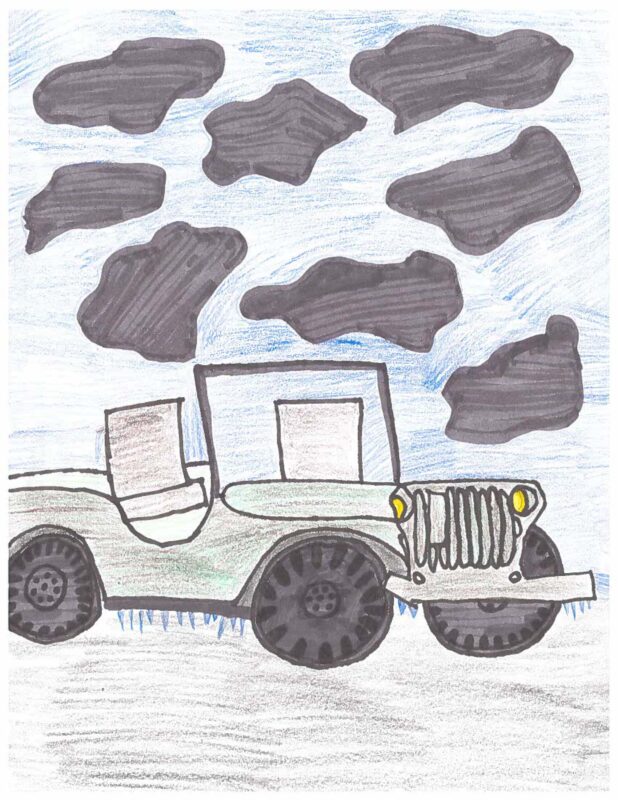
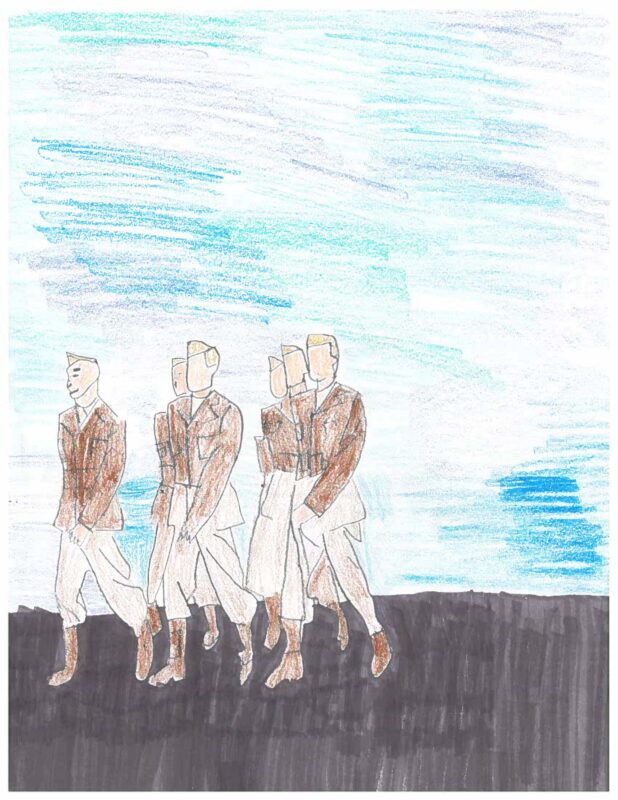 Frank’s unit was tasked with patrolling Belgium to intercept German teams infiltrating Allied lines, who were dressed in U.S. uniforms. The mission was grueling, with relentless freezing rain, sleet and snow. As a low-ranking private first class (PFC), Frank had to sit in the back of a jeep, ducking behind the captain to shield himself from the biting wind. He endured this for a week until Christmas, when the weather finally cleared. With the sun shining, Frank’s team knew that Allied planes could now take to the skies, boosting their morale. Though they never intercepted any German infiltrators, their mission was validated when they arrived in Dinant, where an infantry roadblock had just eliminated one of those infiltrating teams with a bazooka.
In the final weeks of the war, Frank’s unit helped liberate a Soviet work camp near Wiesbaden, and he met with Russian soldiers as the two armies joined together on, April 27, 1945. This meeting of Soviet and American troops at the Elbe River near Magdeburg marked the symbolic end of WWII, which was announced simultaneously by Allied leaders Truman, Churchill and Stalin. Frank recalls joyfully handing out American cigarettes in exchange for vodka as the two forces celebrated their unity.
Frank later served in the Rhineland and Central Europe campaigns as a member of the six-man IPW Team attached to T-Force under General Omar Bradley’s 12th Army Group. At that time Frank was involved in army intelligence, focusing on POW interrogation. His job was to assess the value of captured individuals and properties, as they related to the Nazi government, party, industry and technology. These could also be useful to the Allied occupation and for prosecuting war criminals. Frank’s unit closely followed the front lines, interrogating German POWs and seeking out war criminals and military plans.
After the war and during the occupation, he oversaw German POWs tasked with packing and shipping Nazi documents to America in support of future war crime prosecutions. After the war, Frank also investigated the fates of his relatives in Germany and learned that eleven family members had been murdered by the Nazis. This included his Aunt Else, the widow of his Uncle Max who was killed early on. In America Frank completed his undergraduate degree in Psychology and Education at the City College of New York and later obtained a Master’s degree in Police Administration from Michigan State University. He continued his military career for a total of 35 years, serving three more tours in West Germany, in post-war Korea and during the Vietnam War. He achieved the rank of colonel and retired as Chief of Staff of the Military District of Washington.
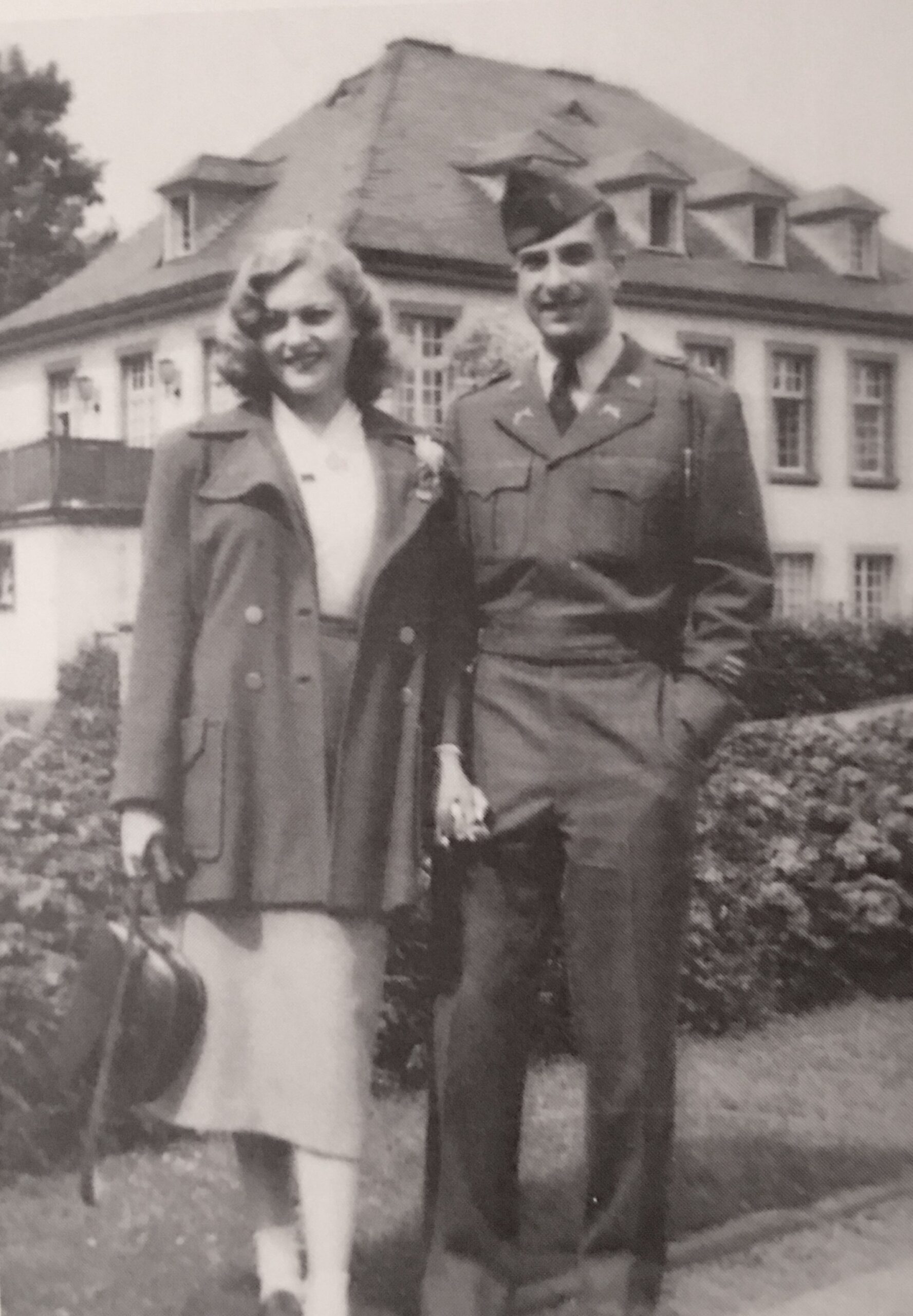
Frank and his wife Pauline in Wurzburg, Germany
In 1948 Frank married Pauline Brimberg, and they raised a daughter, Laura. Frank is a volunteer at the United States Holocaust Memorial Museum, where he shares his experiences with young people, urging them never to take freedom for granted and to be willing to fight for it if necessary. He emphasizes how fortunate they are to have been born in the U.S.A. and to hold American citizenship, which should not be taken for granted, and he encourages them to preserve democracy.
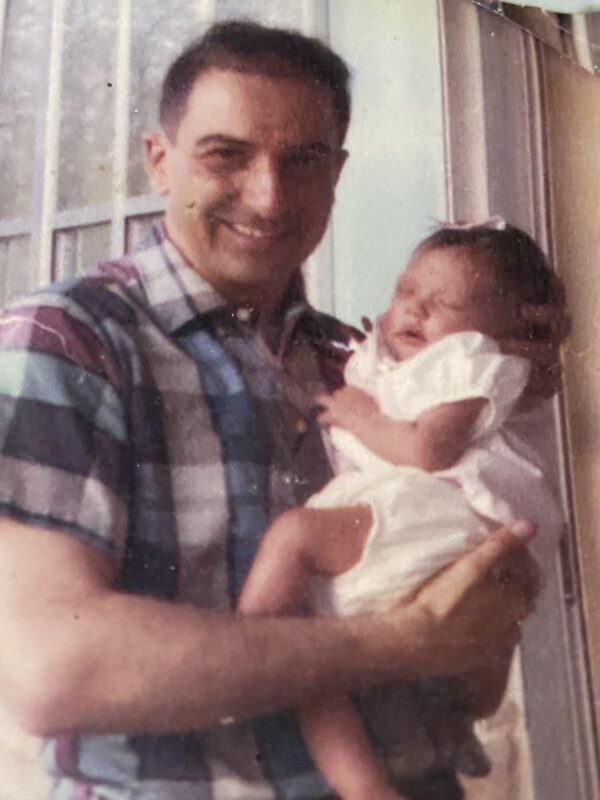
Frank holding his daughter Laura, 1964
Frank Cohn passed away on July 4, 2026, surrounded by his loved ones. It seems fitting that a patriot like Frank would leave us on Independence Day, during our country’s 250th birthday celebration.
 Runaway Hero
A BOOK by ME, a book series developed by Deb Bowen, empowers students to preserve history by telling the story of unsung heroes in our communities. For the young participants, it’s a guided cross-curricular project that gathers stories of people who do amazing things but have received little or no recognition. Students learn how to publish a picture book that is a primary source document with photographs and a biography.
Since 2003, Deb Bowen has been arranging meetings between students and individuals from the WWII generation. This intergenerational storytelling results in unique storybooks written and illustrated by kids for kids in the A BOOK by ME series. More about Deb Bowen >