
Red Cross, Rosie & Resilience
The Patriotism of Dorothy Stoddard
A BOOK by ME - True Stories Written by Kids for Kids
Written by Sierra LaPorte and Illustrated by Annie Butler

A small town girl named Dorothy became an example of courage, strength and dedication of women during World War II. Dorothy first served as a nurse’s aide with the Red Cross and later worked in the Wurlitzer Piano factory in DeKalb, Illinois. This factory was producing wooden air frames for two of the U.S. Navy’s top secret drone and guided bomb projects. It’s hard for me to believe a piano factory became part of the birth of the American drone and smart-weapon technology but it’s true. Dorothy’s story is a terrific example of how American factories, and the women who worked in them, were transformed by World War II. A big thanks to Dawn Wexell and the General John Stark Chapter of DAR for recommending this story for the A BOOK by ME series. It was a great collaboration!
— Deb Bowen, Executive Director Understanding Works
Dorothy (Willrett) Stoddard looks like a common senior citizen of 100-years-old but she’s a World War II Veteran and a legend! What an experience interviewing someone from the WWII era who did so much for the war effort. As I’ve learned more about her, I’ve been inspired and amazed at everything she has accomplished. I learned much from this sweet, grey-haired woman. Working with Dorothy has been an amazing experience and I have loved getting to know her. Dorothy is a loyal patriot, which has been shown through her service to this country, and I’m so happy that I’m able to share her story. I hope you enjoy reading about her bravery and her service to America!
-Sierra LaPorte
-

- Author Sierra LaPorte
-

- Dorothy & author
-

- Illustrator Annie Butler
Dorothy Willrett Stoddard
Red Cross, Rosie the Riveter, WAC
Dorothy Stoddard’s life is a testament to resilience, service, and dedication—values that were pivotal during the transformative period of World War II, when women took on roles that reshaped both the workforce and society.
Born in 1924, Dorothy grew up in a world still scarred by the Spanish Flu pandemic of 1918-1919. This was one of the deadliest pandemics in history, claiming millions of lives worldwide. The pandemic’s devastating impact was felt long after it ended, leaving emotional scars that would shape future generations. Dorothy’s personal encounter with loss came in 1931, when her mother succumbed to the flu, deepening her understanding of grief and strengthening her resilience.

Dorothy with siblings; Raymond, Barb, Frank, Charlotte, Robert & Dorothy (in order by height)
As Dorothy came of age, history unfolded around her–from the lingering effects of the pandemic to the shocking bombing of Pearl Harbor on December 7, 1941, an event which thrust the United States into World War II. The bombing sent shockwaves across the nation, igniting a surge of enlistments and transforming the home front. Factories that once produced consumer goods pivoted to wartime production, while women, once confined to traditional roles, entered the workforce in unprecedented numbers.
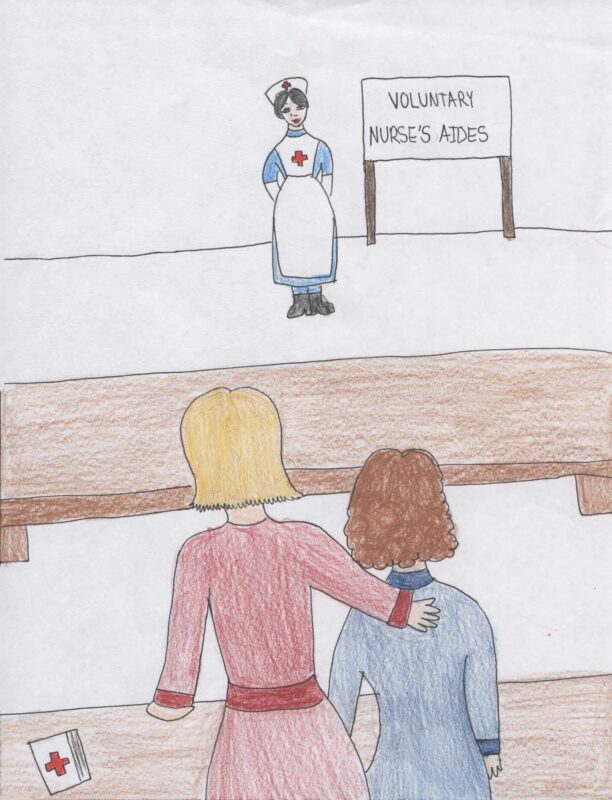
During the war, a critical shortage of nurses emerged as many professionals were sent overseas to care for the wounded. To fill the gap, the American Red Cross organized training programs for women to assist in hospitals. These women were trained to handle essential duties like taking temperatures, making beds, and providing general care so that fully trained nurses could focus on more complex tasks. Dorothy responded to this need, assisting in hospitals and playing an integral role in the war effort.
The war also sparked major changes in manufacturing. Factories across the country adapted to meet the needs of wartime production. Wurlitzer, traditionally known for manufacturing pianos and other musical instruments, transitioned to manufacturing military components, including precision parts for aircraft and communications equipment.
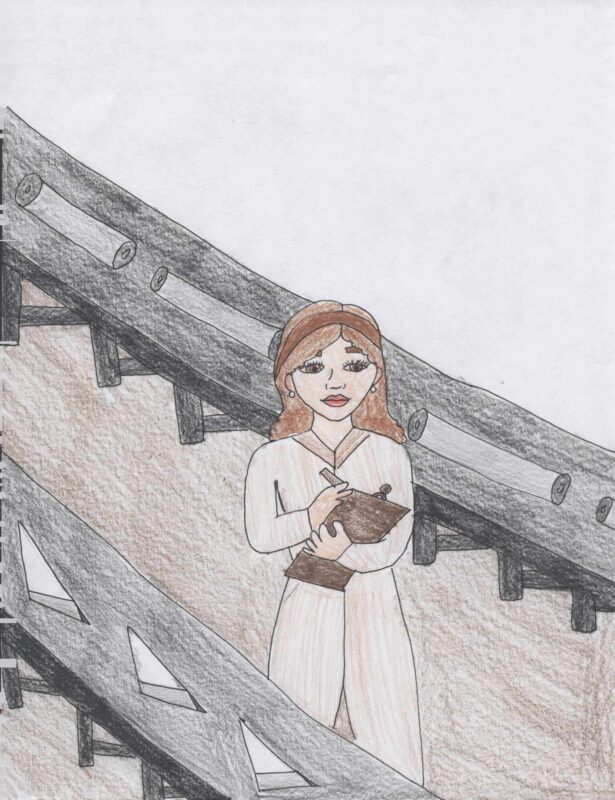
Dorothy began her work at Wurlitzer as an inspector, a critical role that involved checking the quality of parts being produced. Dorothy’s attention to detail helped ensure that every part met the rigorous specifications required. Her exceptional skills and dedication quickly earned her a move to Department 42, a highly classified section of the plant that developed early aerospace technologies, including components for guided missiles and other advanced military systems.
The transition from piano parts to military equipment was a monumental change for both the workers and the plant itself. It marked a significant shift in the industrial landscape, with women like Dorothy stepping into technical and skilled roles in factories that had once been dominated by men. This period is widely remembered as the “Rosie the Riveter” era, where women proved that they were not only capable of filling these roles but excelling in them.
Dorothy’s contributions extended beyond the factory floor when she joined the Women’s Army Corps (WAC), a branch of the U.S. Army that allowed women to serve in non-combat roles. After rigorous training at Fort Des Moines, a site of historic importance as the first WAC training center, Dorothy became a laboratory technician. She assisted with blood work and diagnostic tests, and screenings for infectious diseases, playing a vital role in monitoring the health of soldiers and preventing the spread of illness within military ranks.

Fort Des Moines was also significant for its role in training African American women for the military. It was one of the first places where African American women were recruited and trained, providing opportunities for them to serve their country in ways that had been previously denied. Dorothy’s experience at Fort Des Moines was not only an integral part of her own journey but also a part of a larger movement of women breaking barriers in the military during World War II.

WACs, August 1945
One of the most iconic symbols of the Women’s Army Corps were the uniforms, which became a point of pride for the women who wore them. The WAC uniforms were made from durable wool and cotton blends, designed to withstand various weather conditions and provided practicality for the demanding tasks the women undertook. Each uniform was meticulously tailored to reflect the high standards of the Army. Women in the WAC were held to strict expectations of cleanliness, orderliness, and personal appearance, ensuring they embodied the values of professionalism and discipline. Dorothy wore her WAC uniform with pride, knowing it was not just a piece of clothing, but a symbol of her service and her country’s recognition of her contributions.

After the war, many veterans, including Dorothy, kept their uniforms as mementos of their service. Dorothy even repurposed her wool, off-duty dress, turning it into a rug—a creative and lasting reminder of her time in the Corps and the pride she felt in her role.
Dorothy continued to serve her community and country after the war. She worked as a laboratory technician while simultaneously standing the first-aid station at a local cannery. During and after the war, canned goods were essential for feeding soldiers and supporting rationing at home. DeKalb County, with its rich soil, was home to several canneries. Workers at these canneries operated heavy machinery, handled sharp tools, and worked with steam and boiling liquids—conditions that frequently led to injuries. In her first-aid role, Dorothy’s Red Cross training and lab experience allowed her to respond quickly and effectively to workplace accidents.
Over the years, Dorothy’s commitment to service never waned. She stayed involved in her community through organizing Memorial Day events and honoring veterans. In 2016, she was recognized for 66 years of service. Now, at 100 years old, Dorothy’s legacy continues to inspire as she shares stories of her wartime experiences, like transforming her off-duty dress into a rug—an enduring symbol of the pride she felt for her service.
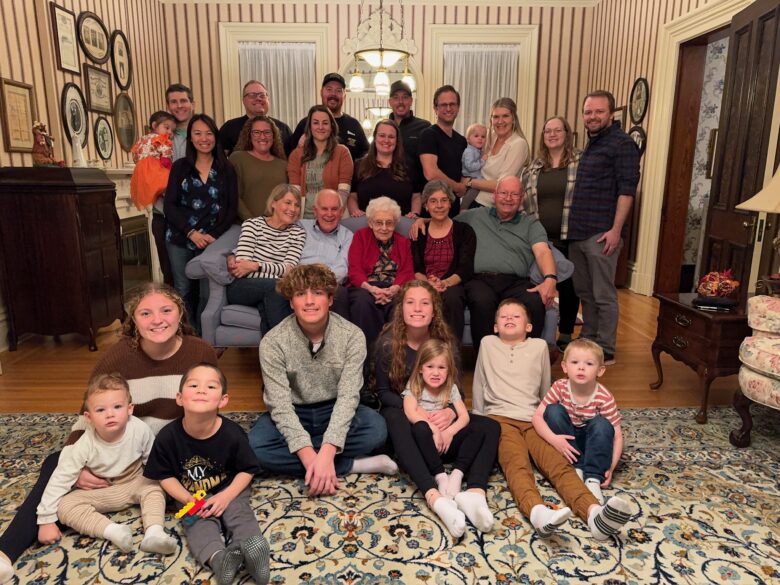
Dorothy’s entire family at her 100th birthday celebration 2024
Dorothy’s life is a vivid example of the strength, perseverance, and dedication of the Greatest Generation. Her story—shaped by her contributions with the Red Cross, her work at Wurlitzer, and her service in the WAC—highlights the transformative role of women during World War II. As Oveta Culp Hobby, the first director of the WAAC/WAC, said, “Women who stepped up were measured as citizens of the nation, not as women… This was a people’s war and everyone was in it.” Dorothy’s legacy is a living testament to this spirit, one that shaped the war effort and the course of history.
 Red Cross, Rosie & Resilience
The Patriotism of Dorothy Stoddard
A BOOK by ME, a book series developed by Deb Bowen, empowers students to preserve history by telling the story of unsung heroes in our communities. For the young participants, it’s a guided cross-curricular project that gathers stories of people who do amazing things but have received little or no recognition. Students learn how to publish a picture book that is a primary source document with photographs and a biography.
Since 2003, Deb Bowen has been arranging meetings between students and individuals from the WWII generation. This intergenerational storytelling results in unique storybooks written and illustrated by kids for kids in the A BOOK by ME series. More about Deb Bowen >