
Living With Lovejoy
Written by Kate Morrow
Illustrated by Rashida Mohamed Juma
A BOOK by ME - True Stories Written by Kids for Kids
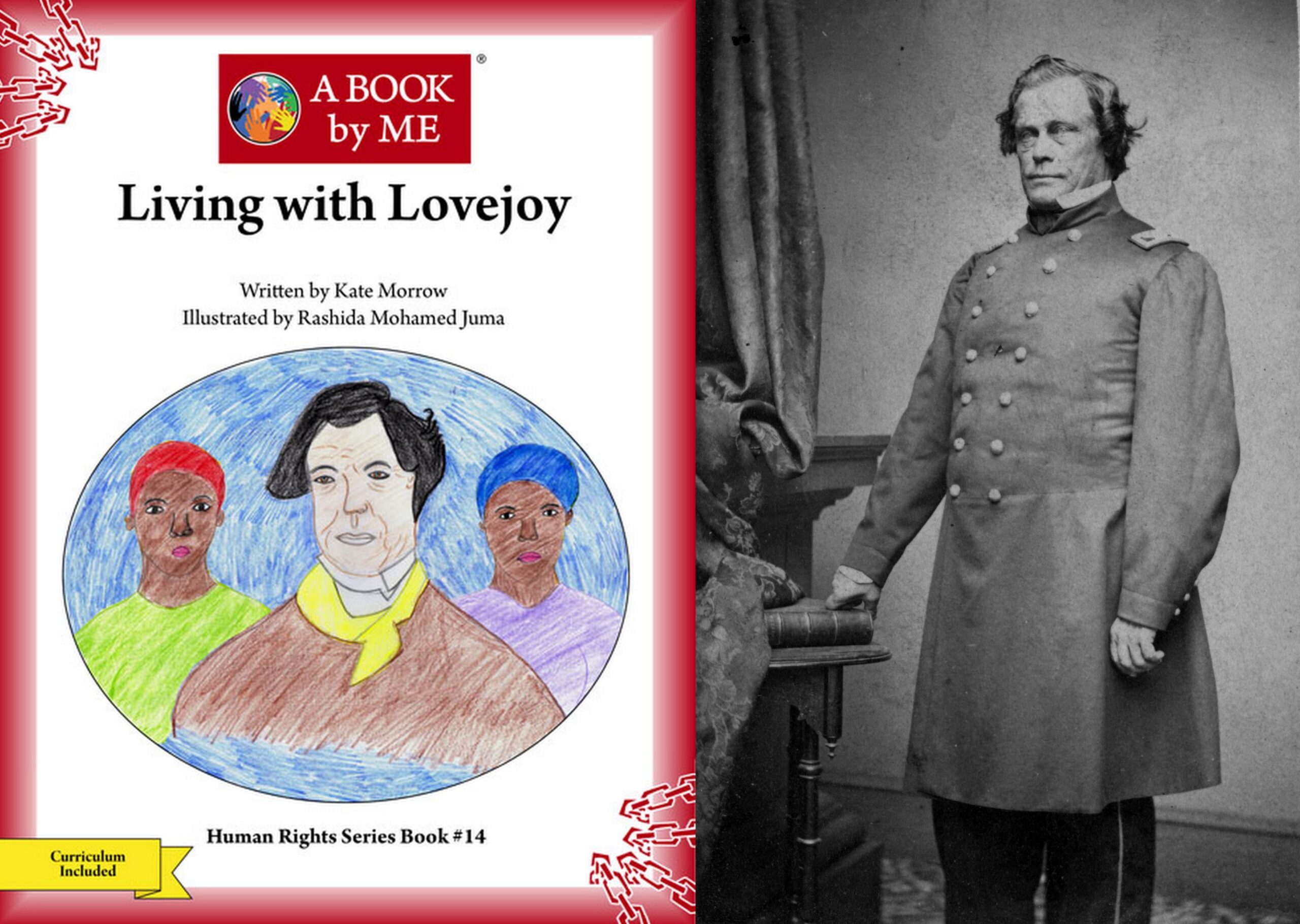
Owen Lovejoy was a “conductor” on the Underground Railroad, as well as an attorney, a minister, a Congressman from Illinois, and a friend of Abraham Lincoln. His story includes risking his life and that of his family by hiding runaway slaves on their journey to Canada, sheltering them in his homestead in Princeton, Illinois.
Lincoln and Lovejoy shared similar political views, and their friendship deepened as they focused on issues related to abolition and civil rights. Today, Lovejoy’s home is a museum, and a storybook about him was authored by a teenage girl who worked there. She was thrilled to share his story with young readers, and the book was illustrated by an exchange student from Africa.
For years, I worked with high school exchange students who came on scholarships from developing countries. My role included providing “educational enhancements,” and one year, we had an unusually high number of students from Africa. While traveling on a bus to Chicago for a White Sox game, our group included Black students from a local enrichment program.
During our visit to Lovejoy’s homestead, we enjoyed a picnic lunch on the lawn, where the kids ate then threw Frisbees and played catch before we continued on to the ballpark. I think Owen would have approved.
Once we arrived in Chicago, we met a former player from the Negro League days and the kids listened intently as he recounted his experiences playing ball and with racial mistreatment. We then enjoyed a baseball game in a major league ballpark—truly an American experience and a dream come true for many of these kids.
Deb Bowen
Executive Director Understanding Works (501c3 nonprofit organization)
Featuring A BOOK by ME (Books Written by Kids for Kids)
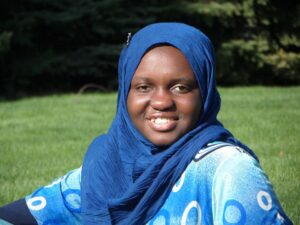
Illustrator Rashida Juma
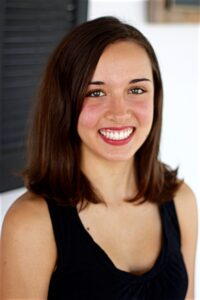
Author Kate Morrow
“I’ve had the honor of working at the Lovejoy Homestead by giving tours to those interested. The home of the Denham and Lovejoy family is located on the eastern edge of Princeton, Illinois. This is my hometown and I’m very proud of our rich heritage. Reverend Lovejoy was our most famous resident. He lived in Princeton from 1838 until his death in 1864. Our hero was a congressional leader and a founder of the national Republican Party. He is most well known because his home was an important stop for runaway slaves in the Underground Railroad.” — Author Kate Morrow
Owen Lovejoy – “Conductor” of Underground Railroad
January 6, 1811- March 25, 1864
The Underground Railroad was maintained in the northern states to aid runaway slaves in their attempt to reach freedom in Canada. It wasn’t a real railroad and it was not under the ground. It was called “underground” because it was a secret and “railroad” because it seemed to run regularly like a train route.
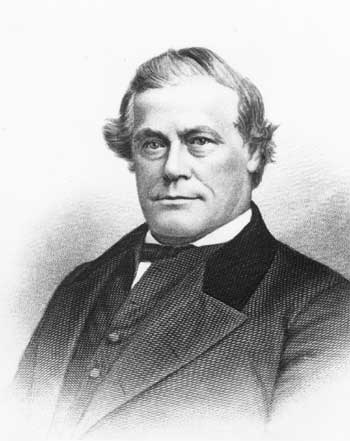
Owen Lovejoy
Princeton was possibly the most important “station” in Illinois because of Reverend Owen Lovejoy. He was born in Albion, Maine and moved to Alton, Illinois as a young adult. There he studied for the ministry while living with his older brother, Elijah, who was the editor of an abolitionist newspaper. After Elijah was murdered in November of 1837 by pro-slavery forces, Owen vowed to carry on his work to end slavery.
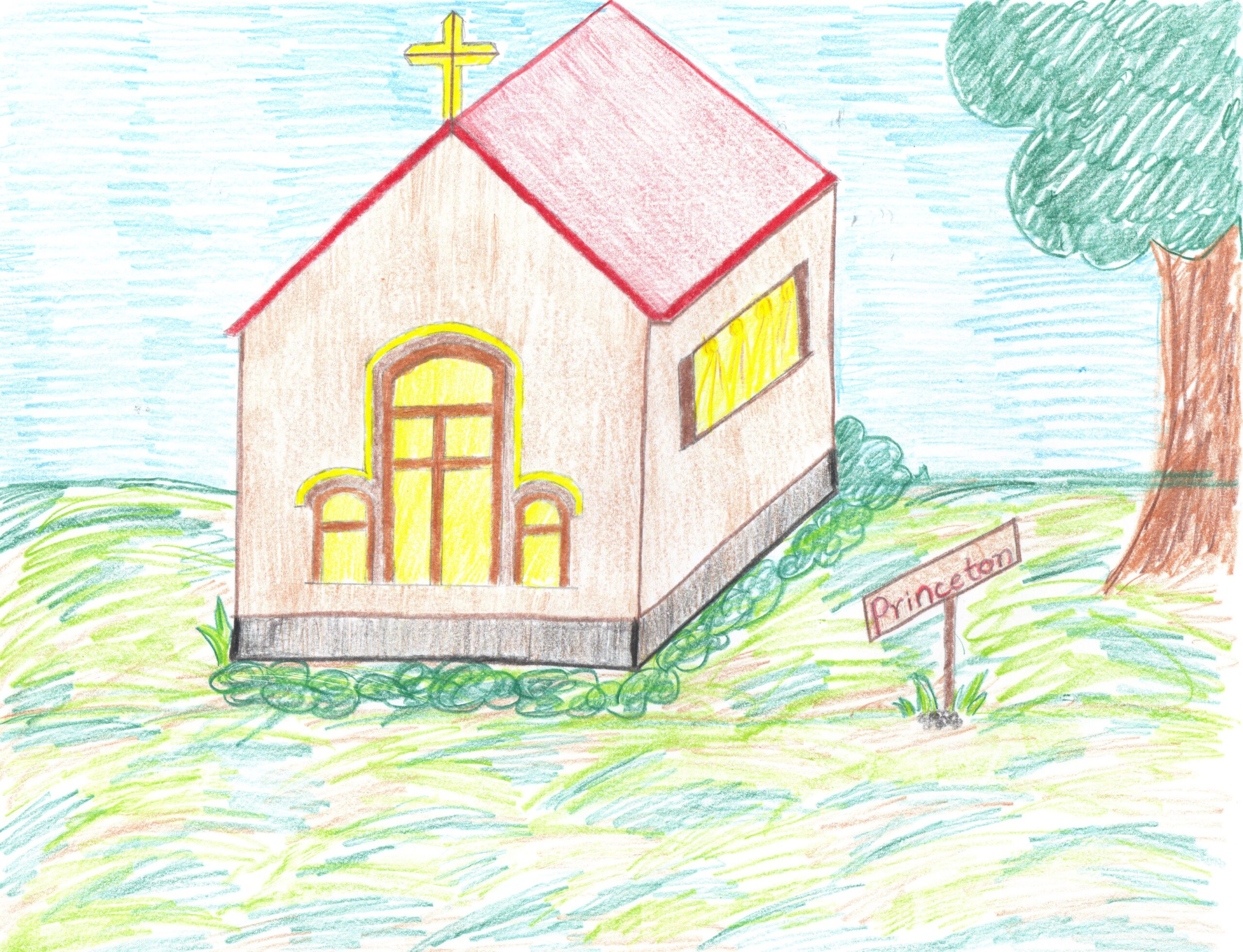
Lovejoy accepted a position in Princeton as minister of the Hampshire Colony Congregational Church and moved there in 1838. He rented a room from Butler and Eunice Denham and, when Mr. Denham died in 1841, Lovejoy married his widow two years later. The couple had six children of their own in addition to the three daughters from Mrs. Lovejoy’s first marriage. The farm became known as the Lovejoy Homestead, even though Lovejoy never owned any of the property.
It is believed that Butler and Eunice Denham hid fugitive slaves in their home before Owen Lovejoy lived there, but certainly, after Lovejoy became head of the household, the Underground Railroad was very active. In 1843, he was indicted by the grand jury for harboring two slave women; but was acquitted at his trial.
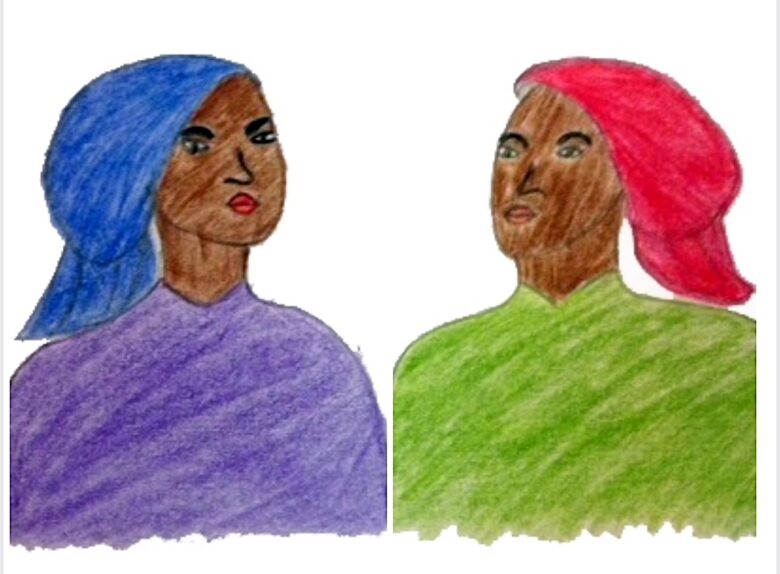
Agnes and Nancy
He used the pulpit to speak out against slavery and, also, became involved in the Underground Railroad. Later, he entered national politics as a way to continue his crusade against slavery. He was elected to Congress in 1856 and served there until his death in 1864.
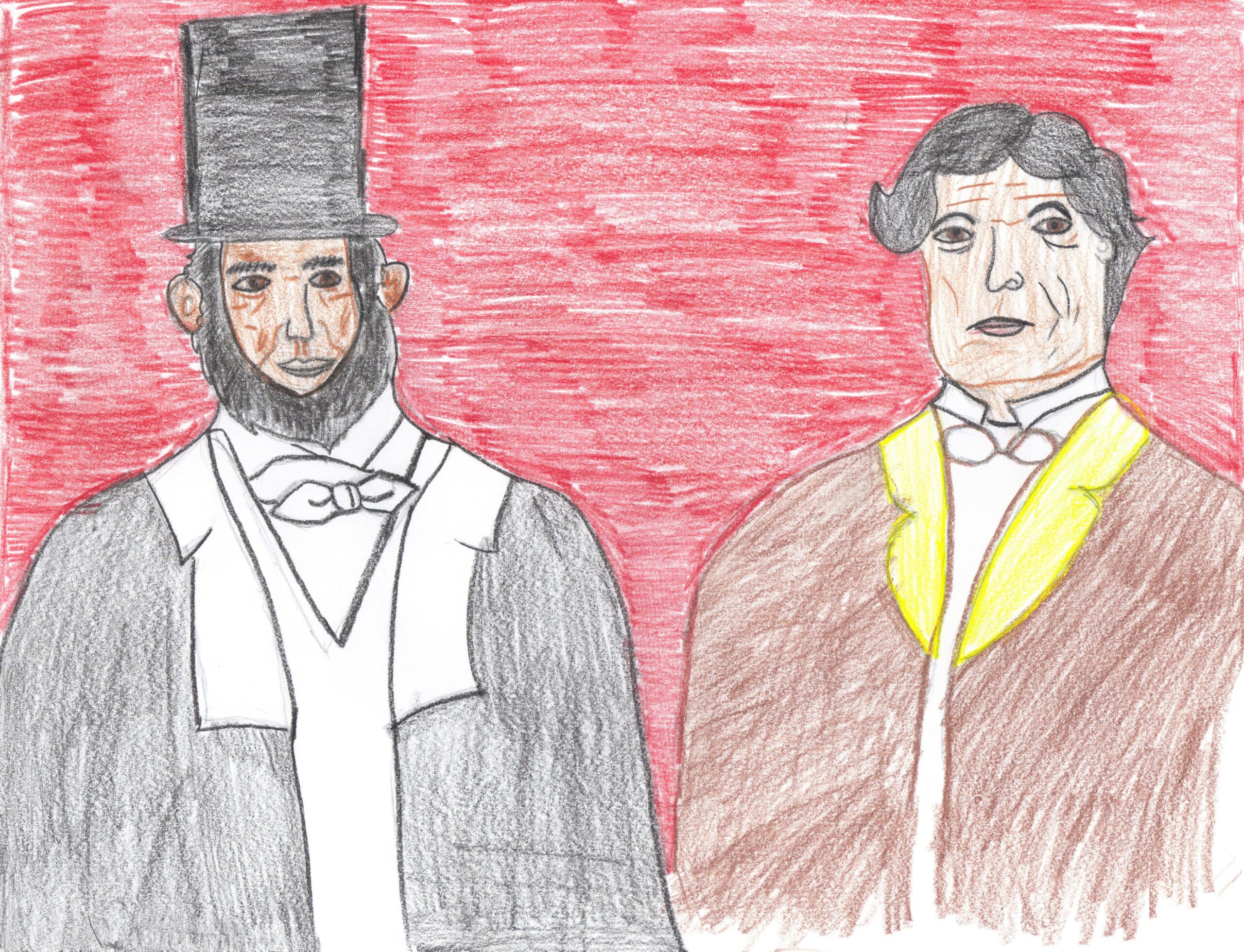
Lovejoy was a platform speaker in support of Abraham Lincoln in his famous debates with Stephen Douglas. While in Congress, he introduced the final bill to end slavery in the District of Columbia. This was a goal of the American Anti-Slavery Society. He also helped gain passage of legislation prohibiting slavery in the territories. He was one of the few steadfast Congressional supporters of Lincoln during the American Civil War. Lincoln wrote, “To the day of his death, it would scarcely wrong any other to say, he was my most generous friend.”
Princeton was on the Quincy route of the Underground Railroad in Illinois. Runaway slaves came up the Mississippi River and stopped at many stations between Quincy and Galesburg before reaching Princeton. Each stop was usually about ten miles apart. From Princeton, the slaves would have traveled on to one of several towns that harbored fugitives, including LaMoille, Paw Paw, LaSalle-Peru, Ottawa and Somonauk. The choice often depended on which town was the safest at that particular time. At other times, Underground Railroad operators would transport a runaway slave to a nearby village.
The trip to Canada could possibly take a year. The best time to run was during holidays or on a weekend. A few days often went by before someone noticed the slave was gone. The hardest part of running away was knowing one may never see family or friends again. The slaves learned basic methods to keep running the right direction. Transportation was sometimes by wagon with the slave hidden under a load of hay or straw, but many walked during the night when the North Star could guide them to safety. During the day, remembering that moss grows on the north side of trees was valuable. Wading in streams confused dogs that were tracking runaway slaves. The travelers had much to remember, and fear was their constant companion.
Members of The Underground Railroad often used specific terms, based on the metaphor of the railway.
For example:
· People who helped slaves find the railroad were “agents” (or “shepherds”).
· Guides were known as “conductors.”
· Free or escaped blacks (sometimes whites) who helped guide fugitives were “abductors.”
· Hiding places were “stations.”
· “Station masters” hid slaves in their homes.
· Escaped slaves were referred to as “passengers” or “cargo.”
· Slaves would obtain a “ticket.”
· Financial benefactors of the Railroad were known as “stockholders.”
“I have decided to stick with love. Hate is too great a burden to bear.”
-Dr. Martin Luther King Jr.
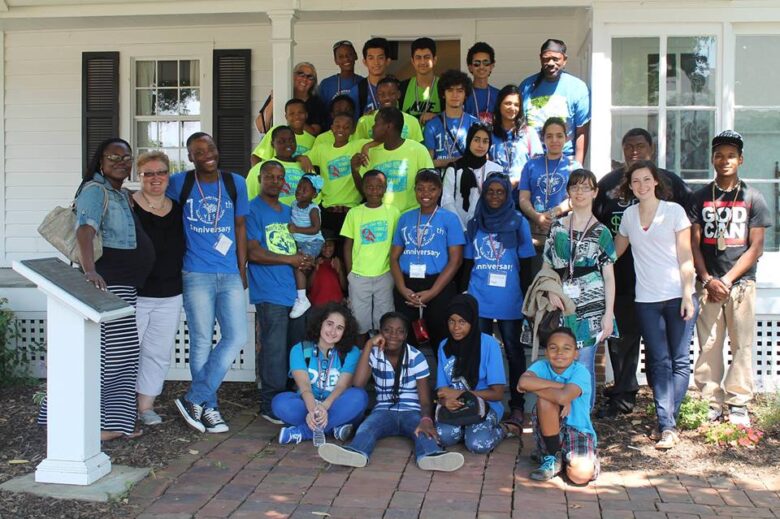
In August of 2013, students affiliated with the Martin Luther King Center in Rock Island, Illinois, along with high school exchange students attending various high schools in the Quad Cities area, toured the Lovejoy Homestead. It was the largest group of African Americans to ever take a tour at one time. In addition, Deb Bowen’s foreign students from Kenya, South Africa, Morocco, Tanzania, Kuwait, Azerbaijan, Bahrain, Turkey, Egypt, India, Serbia and the Philippines were excited to learn about the Underground Railroad. This tour was set up by author Kate Morrow before she went away to college.
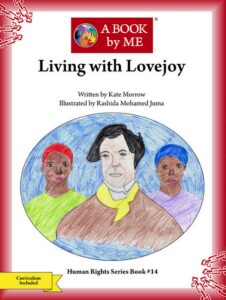 Living With Lovejoy
A BOOK by ME, a book series developed by Deb Bowen, empowers students to preserve history by telling the story of unsung heroes in our communities. For the young participants, it’s a guided cross-curricular project that gathers stories of people who do amazing things but have received little or no recognition. Students learn how to publish a picture book that is a primary source document with photographs and a biography.
Since 2003, Deb Bowen has been arranging meetings between students and individuals from the WWII generation. This intergenerational storytelling results in unique storybooks written and illustrated by kids for kids in the A BOOK by ME series. More about Deb Bowen >